

Warm Minimalism and Modern Heritage: The Interior Trend Bridging Old and New
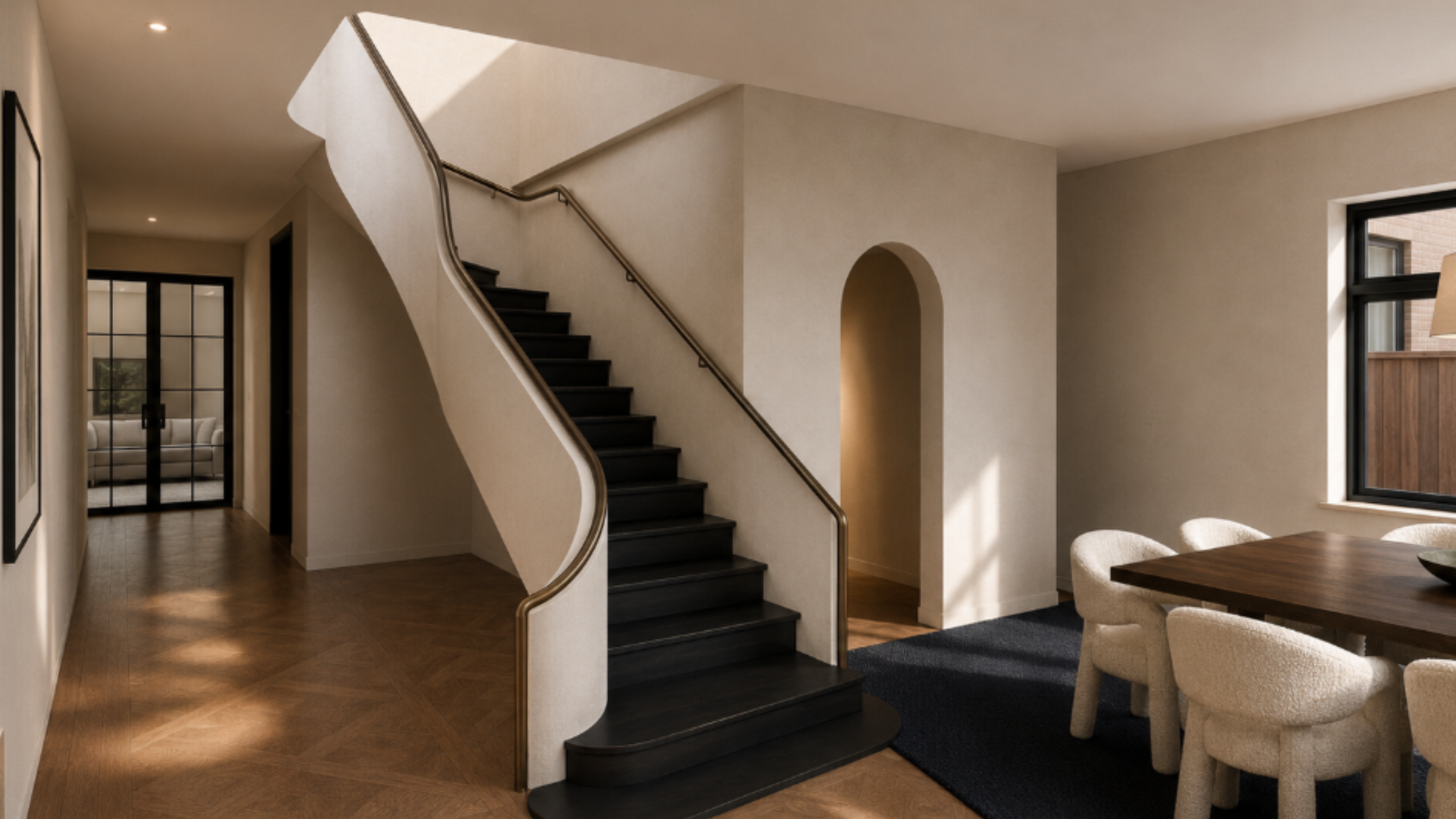
Melbourne has one of the highest concentrations of period housing stock in the country — Victorian terraces, Edwardian villas, and Californian bungalows sit across entire suburbs, often with their original cornices, fireplaces, and timber floors still intact. For years, renovating one of these homes tended to mean picking a side: restore it faithfully, or strip it back and go fully contemporary. Modern heritage interior design rejects that choice entirely, and it's become one of the most requested approaches for homeowners working with a period property.
Here's what the trend actually means, and how it translates to the architectural bones common across Melbourne's heritage suburbs.
What 'modern heritage' actually means as a style
Modern heritage isn't a strict style with a fixed set of rules — it's an approach. The core idea is straightforward: keep a home's original architectural character legible, and let everything added around it be quiet, contemporary, and restrained. The original details do the talking; the new work doesn't compete with them.
This is different from two more familiar approaches:
Heritage restoration, which aims to return a home as closely as possible to its original appearance, materials, and detailing
Contemporary renovation, which typically clears out original detailing in favour of a fully modern material and spatial language
Modern heritage interiors sit deliberately between the two. An ornate ceiling rose might remain untouched while the walls beneath it are painted a single, calm colour instead of a period-accurate palette. Original timber floors might be kept and simply refinished, then paired with plain, unfussy furniture rather than antique or reproduction pieces. The tension between old and new is the point, not something to smooth over.
Keeping original details while simplifying everything around them
The details worth protecting in most Melbourne period homes are well known, and they're usually the features clients are most reluctant to lose:
Ornate cornices and ceiling roses — often the most distinctive original feature in a Victorian or Edwardian home, and one of the easiest to retain even through a substantial renovation
Timber floorboards — original boards, refinished rather than replaced, ground a renovated space in the home's history immediately
Fireplaces and mantels — even where a fireplace is no longer functional, retaining the surround as a feature element keeps a room anchored
Picture rails and skirting profiles — smaller details like these are easy to lose during a renovation but contribute significantly to a room reading as genuinely period rather than reproduction
The simplification happens everywhere else. Walls move to a single calm colour rather than a period colour scheme. Furniture and joinery lean toward simple, contemporary forms rather than ornate or reproduction pieces. Lighting is understated rather than decorative. The goal is a kind of visual quiet that lets the original architecture stand out precisely because nothing around it is competing for attention.
Where warmth comes from: materials, not clutter
A common misreading of minimalism is that it means sparse and cold. Warm minimalism interiors avoid that trap by getting warmth from material choice and texture rather than from pattern, colour, or ornamentation.
Natural timber tones — used in furniture, joinery, and flooring, timber brings warmth without introducing visual noise
Textured, tactile materials — linen upholstery, raw plaster finishes, and honed rather than polished stone all add depth without competing with original detailing
Warm, layered lighting — multiple lower-level light sources rather than a single central fixture create the kind of warmth a period home's original detailing responds well to
Restrained, earthy colour palettes — warm off-whites, soft clay tones, and deep greens or browns used sparingly, rather than a stark white-on-white scheme
This approach to blending old and new interior design tends to age better than trend-driven decorating, because the architecture — not the furniture or paint colour of the moment — remains the room's focal point.
Applying the trend to a Victorian, Edwardian or Californian bungalow
Each of Melbourne's common period home types has slightly different bones, and the modern heritage approach adapts accordingly.
Victorian terraces and villas typically have the most ornate original detailing — elaborate cornices, ceiling roses, and decorative fireplace surrounds. These homes usually respond well to a strong contrast approach: keep the ornate details fully intact and pair them with very plain, contemporary furnishings and a restrained palette, letting the contrast do the work.
Edwardian homes tend to have slightly simpler, more geometric detailing than Victorian properties, along with generous timber joinery and often leadlight windows. A modern heritage approach here often means retaining the timber detailing and leadlight as feature elements while keeping wall treatments and furnishings simple and uncluttered.
Californian bungalows already lean toward a warmer, more textural material palette — exposed timber beams, brick, and deep verandahs. These homes often need less contrast to achieve a modern heritage feel, since the original materials are already warm; the main work is usually in decluttering and introducing a more restrained, contemporary furniture language.
In every case, the sequencing matters: identify which original features are worth protecting before any design work begins, since decisions made early in a renovation are far harder and more costly to undo once walls are opened up or floors are covered.
Frequently asked questions
Do I need to keep original features to use this style?
Not entirely, but the trend works best when at least some original architectural character remains — cornices, fireplaces, or original floors are common anchors. A home stripped of all original detailing can still lean into a warm, restrained aesthetic, but it moves closer to contemporary design than modern heritage specifically.
Is modern heritage more or less expensive than a full modern renovation?
It varies by project, but retaining and restoring original features — refinishing floors, repairing cornices, preserving fireplace surrounds — can be more cost-effective than replacing them outright, since new reproduction detailing is often expensive to source or custom-make. The savings from retention are frequently redirected toward materials and finishes elsewhere in the home.
Does this style work in a heritage overlay?
Yes, and it often suits heritage overlay properties particularly well. Because the approach retains and protects original street-facing and character-defining features rather than removing them, it tends to align closely with what heritage overlay controls are designed to protect, particularly for any work visible from the street.
Can warm minimalism work in a home with no original period features?
Yes, though the approach shifts slightly. Without original architecture to contrast against, warmth and restraint come entirely from material choice, texture, and a considered, uncluttered palette — the same principles, applied without the anchor of existing period detailing.
If you're renovating a period home and want to explore how modern heritage design could work for your property, book a consultation with our team.
Formery Architecture + Interior Design is a Melbourne Architecture studio working across residential renovation, new builds, subdivision and dual occupancy projects. Our director Emma works with homeowners across Melbourne's inner north, inner south-east and bayside suburbs.
Book a free discovery call —formery.com.au